

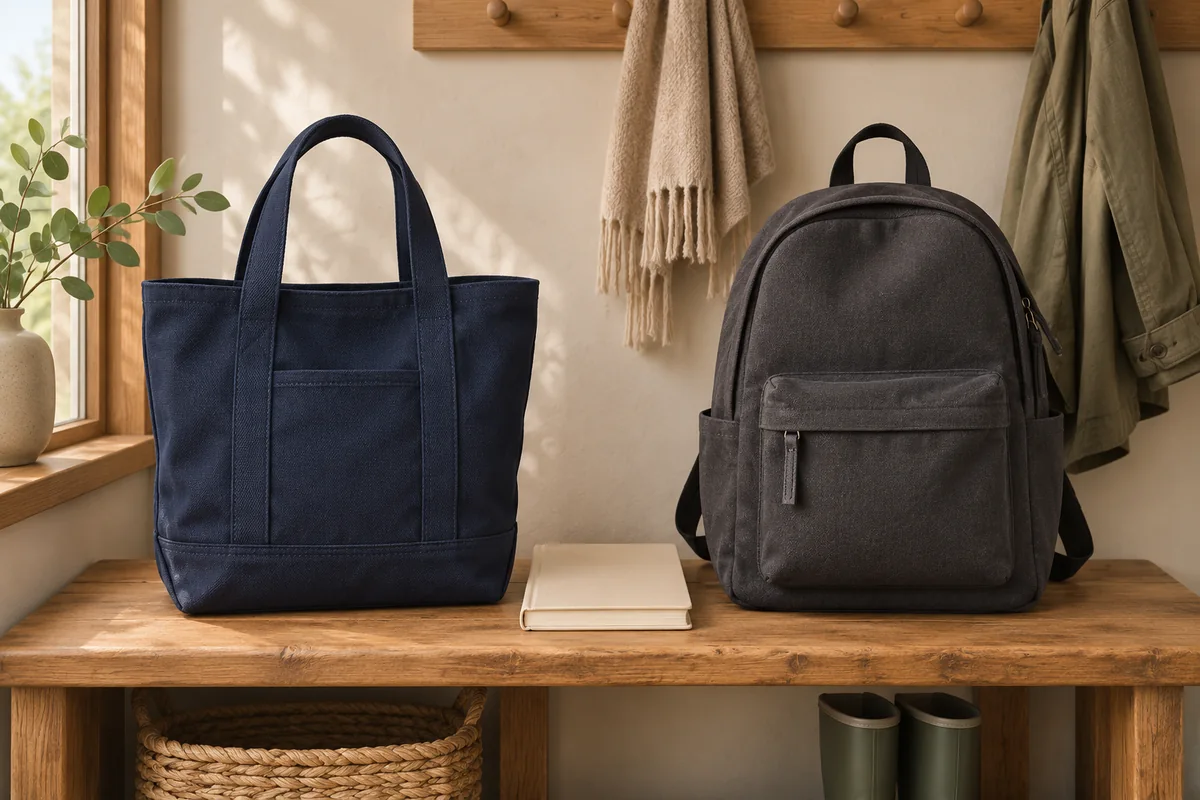
Choose a backpack when the normal workday involves a long walk with a laptop, lunch, and a second layer. A tote often makes more sense when you carry fewer things, frequently reach into the bag, or spend most of the trip seated. The useful comparison starts with what goes into the bag and what you do while carrying it.
A recent commuter discussion captures the problem better than most product filters. The tote looked right in meetings, but carrying it was tiring. One consideration was leaving some of the load at work. That decision costs less than replacing the bag.
Try the longer part of your route
Pack the contents you take on a typical Tuesday. Include the charger and full bottle. If you have a tote and backpack available, load both in turn. Walk for the length of your usual station transfer, including stairs if they are part of the journey. Notice whether you need to hook a thumb under a strap, regularly change shoulders, or put the bag down while you open a door. With the backpack, try reaching for the items you grab while the bag is on your body.
Then test the arrival. Can you get your laptop out in a cramped meeting room without pulling everything onto the table? Does the bag fit where you normally keep it? A backpack with a main zip that opens wide may be fine at a desk and annoying on a packed train. A tote with a usable pocket near the opening can make the reverse trade.
Keep the commuter kit smaller where you can
Take inventory on two days: the day you can predict and the one with a gym or dinner stop. Leave a spare work charger at the office if that is practical. Separate the lunches that require a bulky container from the days you take a snack. Weigh both packing versions to see how far apart they really are. If the heavier itinerary happens twice a month, you can keep the tote for light days and use a backpack when the load changes.
Check the carry line and fit before buying a different tote. Your bag and its contents can sit farther away from your body because of a wide base or a thick jacket. See how to measure tote strap drop and how to check a laptop’s actual fit.
Make the decision by frequency
Count the days on which you need hands free for a rail, a bike, a stroller, or another bag. Count the days when you need a bag that opens easily in front of you. If one need comes up most of the week, fit the main bag to that use. A light tote and a backpack can both earn their place if you have predictable days that call for each.