

Choose a canvas tote if you like a matte woven surface and want the shape or print to feel like part of what you carry. A nylon tote is worth comparing if empty weight, packability, or a smoother exterior matters more. Check the finished bag and its care directions. Canvas describes a fabric construction, while nylon identifies a fiber. Neither name tells you exactly how the finished tote will behave in a downpour or in the wash.
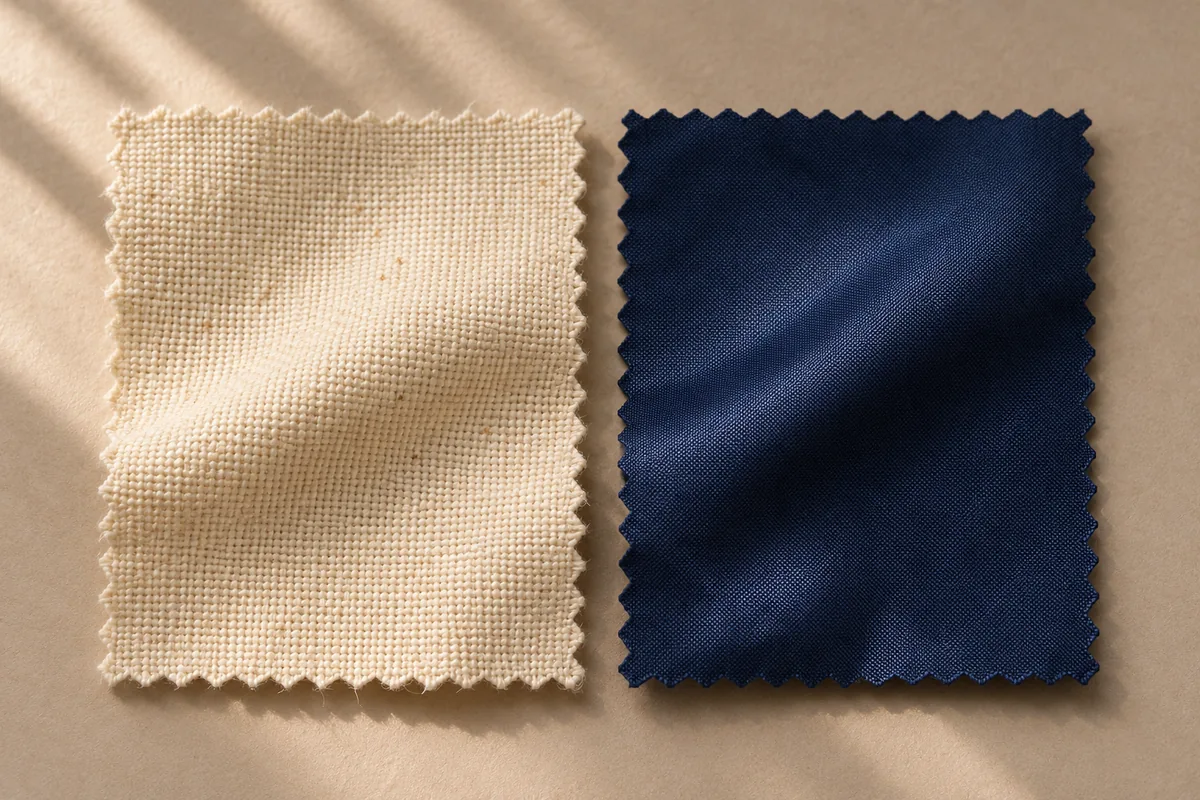
Start with the finish you will touch
Look at the weave and edge finishing in a close photo. Canvas can be light and soft or thick enough to hold a strong crease. Nylon can feel crisp, slick, soft or textured depending on the fabric and finish. If you carry the bag against a knit or an open-weave coat, make sure seams and hardware feel smooth where it will rub.
A tote can contain different materials in the shell, lining, base and straps. If the bag you’re considering has a thick waterproof-looking bottom, ask what the maker actually specifies. A finish that sheds light rain at the surface says little about an open top or water entering around seams. Check the closure comparison if you frequently carry paper.
Compare the finished weight
Read the label next to any number. A canvas listing could state weight per area while a nylon listing gives the whole bag’s weight. The canvas ounces and GSM guide explains the difference. For shopping, ask for finished weight including the straps and any insert you actually plan to use. A heavy zipper, base plate and lining can change the result even if the shell is light.
If you want a tote to sit folded inside another bag, see how the whole piece packs down. Fold it across its broadest panel, then see what ends up on top. A firm pad and large fittings can make a light outer fabric bulky when folded. If you primarily want a tote to stand beside your desk, that bulk may be worthwhile.
Pick a care routine you will follow
Find the label for the exact style. A plain cloth tote and one with the same shell plus a decorated panel may have different directions. A bag you can easily clean as directed may get more use than one that requires special care every time you spill lunch. If a maker gives no instructions, ask before trying to wash the bag.
Take one object from your real routine and compare the bags against it. Try a wet umbrella in its sleeve, a flat folder, or the folded tote inside your other bag. The better bag for that job may have more to do with the base, opening and lining than the fiber named on the listing.