

For a grocery tote, look for a base wide enough to keep your usual cartons or boxes level, handles you can lift with a full load, and an opening you can use at checkout. Capacity helps when it comes in the right shape. A deep, narrow tote may hold a lot of loose items and still leave nowhere to lay down a carton of eggs.
Compare the bag with your standard trip
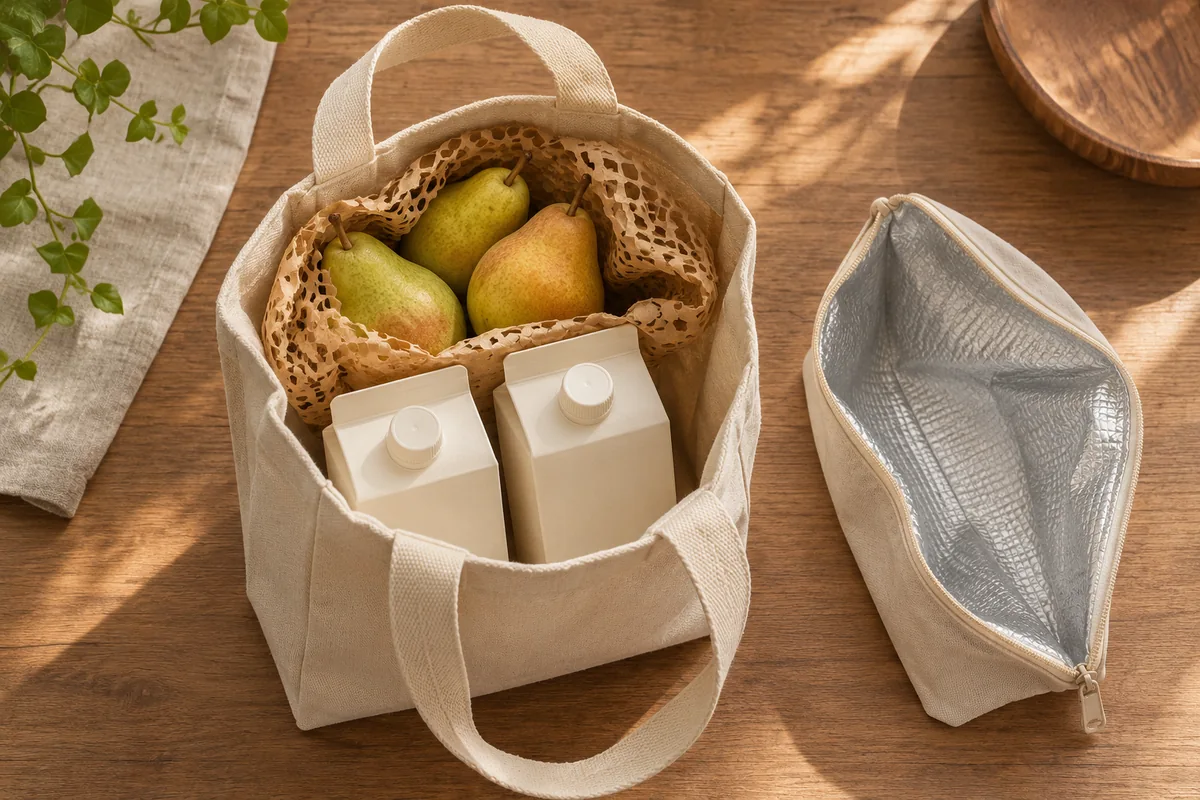
Pick three objects from a typical shopping basket. Include the widest box or container. Place the set together and see how much space the bottom row takes. Measure that footprint. If you pick up fresh produce often, leave room at the top so it can sit on its own rather than underneath a bottle.
A flat tote without a base can work well for a loaf of bread, bagged greens, or a few slim boxes. A base gusset can give a tote a more defined footprint. Check how much interior room stays usable after the fabric folds into corners. If you usually drive, test whether the bag sits level in a trunk or footwell. If you walk, set the loaded bag next to your leg and check whether the wider bottom interferes with your stride.
Pay attention to the lift
A bag can be easy to fill while it is standing on a counter and inconvenient to carry from the same height. Look for enough handle room to grip both straps together and lift without catching your hand on the item at the top. If you carry the bag on your shoulder, compare the drop while wearing your usual outer layer. See the coat-on strap measurement for a useful baseline.
Check the handling instructions and any actual load rating for your bag. Don’t infer strength from the thickness of the fabric alone. Inspect the handle stitching, especially if you routinely carry heavy bottles. For a mixed load, it can be easier to use two manageable bags than one that forces you to stop halfway home.
Make cleanup easy to remember
Separate things that could drip from paper boxes and ripe produce. Put cold items in a suitable insulated bag when your trip calls for it. If you use washable liners or produce pouches, remove and clean them according to their directions. Follow the tote’s label for the material and trim. The printed tote care guide covers the details to check first.
A tote that stays by the door and opens in one movement will probably travel more often than a bigger one that takes up half a shelf. Choose the base for what you buy, then choose the handles for the trip home.