

Pick a work tote for the largest load you carry regularly, then handle occasional bulky items separately. A small tote can make sense for shared desks and light office days. A large tote earns its space if you routinely bring a second layer, papers and lunch on the same trip. The key question is how often you would actually use the extra volume.
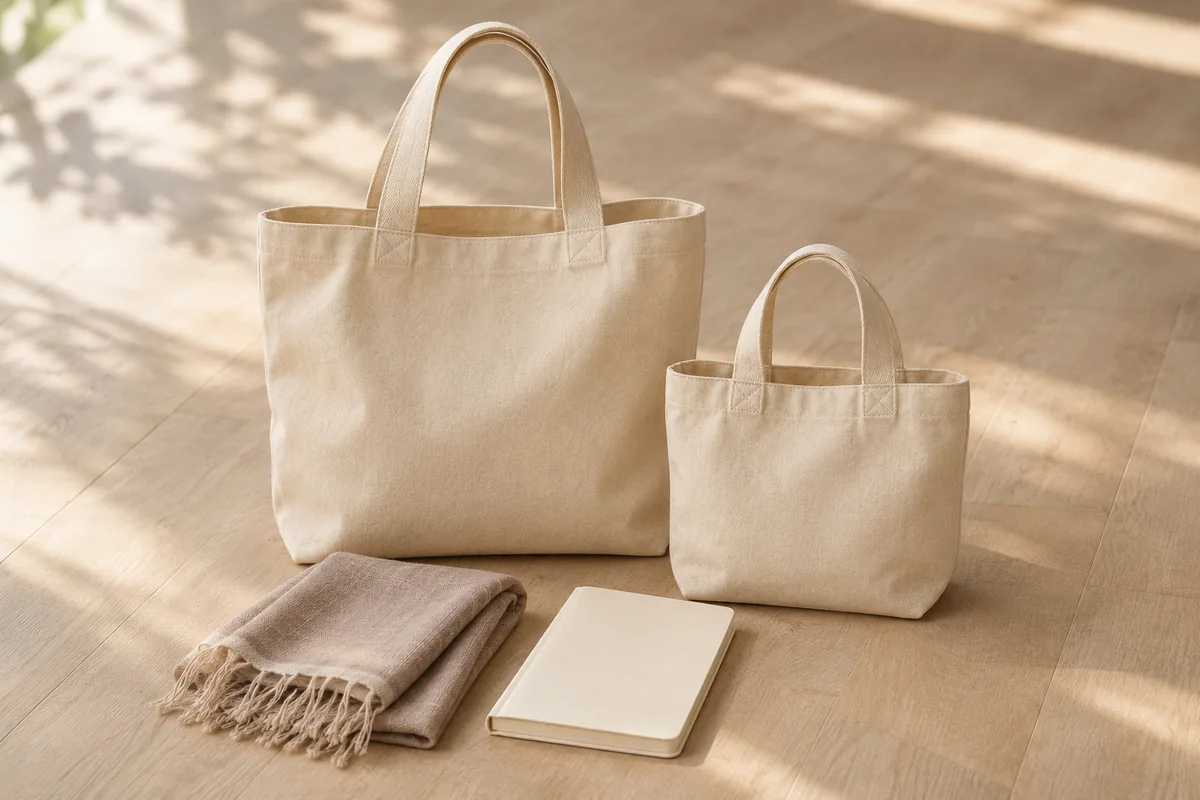
List the two days you live most often
One day might involve a notebook, wallet, bottle and the clothes you are wearing. The other could add a laptop, lunch, a charger and something to change into after work. Put each kit on the table. Look at the difference between the two stacks. Which specific item is forcing a larger bag, and could it stay in the office or travel by itself?
Use a real object as the dividing line. A tall zip pouch can take up more useful height than its width suggests. A work folder you bring twice a week may determine the mouth even if the bag spends most days half empty. Measure that one item with the laptop and rigid-item fit checklist as a guide.
Measure space where you put the tote down
Check the gap beside your desk, the drawer you use, or how much seat space you have on a train. A large bag you don’t fill can still occupy its full base. A soft tote that folds at the sides may fit a narrow slot once the hard items come out. If you put a bag on a hook or chair, check the length of the handles and how low the bag hangs.
Now try access. Place your phone and notebook where they would usually go, then pull each out without setting the whole tote down. In a small bag, bulky items can block the opening. In a large one, small things can sink where they need a pocket of their own. Choose the amount of room you can still manage with one hand.
Decide what the smaller bag costs you
If the only thing that won’t fit is an occasional set of shoes, plan a separate shoe pouch for that day. If your lunch always needs a second container, a bigger everyday bag might simplify the trip. Think about where you keep the spare item while you are at work. A tote saves very little effort if you have to supplement it every other day.
Once you make the choice, revisit it after a normal week. Look for the object you routinely take out or forget. There’s usually an ordinary reason a size feels easy to live with, and it rarely appears in a photo of an empty bag.