

A family recipe can become a tote gift without printing every line of instructions. Choose a recognizable detail to feature on the bag, then include the complete recipe as a separate card. That lets the illustration or a few words remain legible and gives the recipient something they can actually read in a kitchen.
Decide what will feel familiar
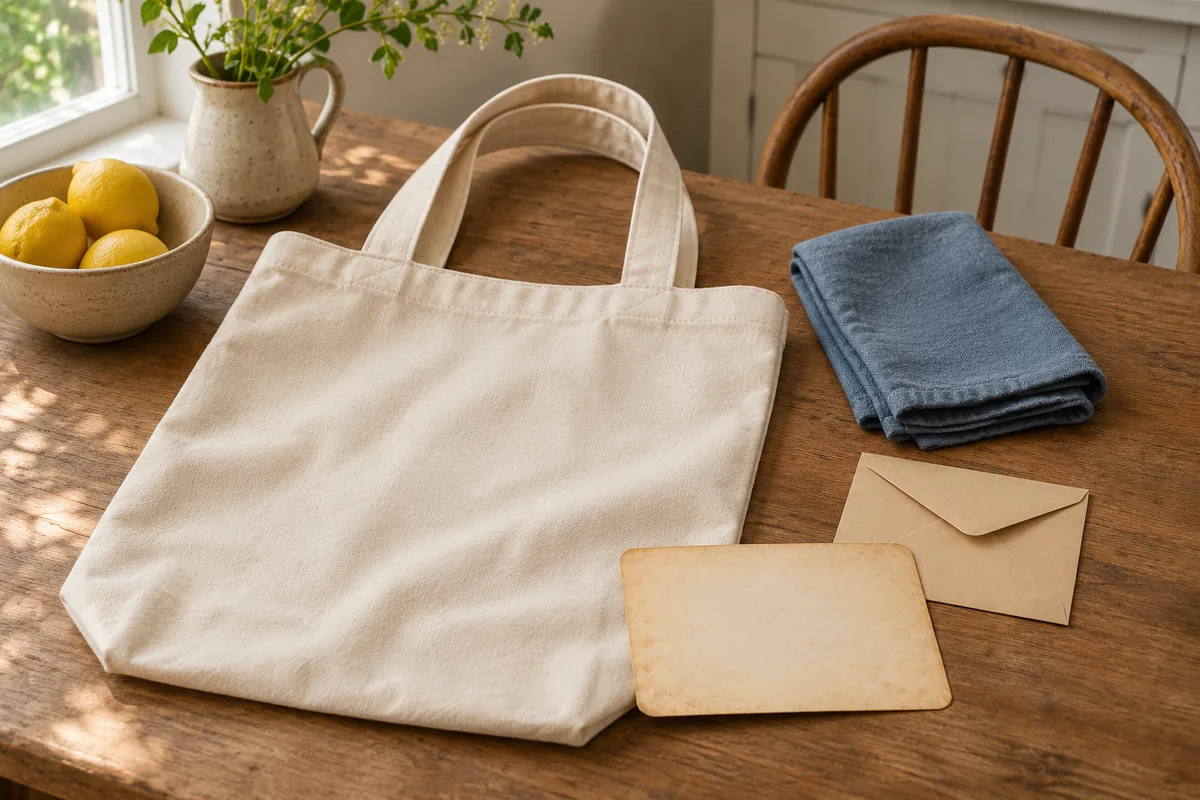
Look at the recipe card on the table and notice what you recognize first. It might be the name of the dish, a little underline, the initials in a corner, or a mark left by years of use. A card with three pages of instructions may still have one detail that brings the whole memory back. Decide which part you want people to see across a room and which part belongs in the owner’s hands.
If the card belongs to another family member, talk with them before scanning or sending it to a printer. Recipes can include personal notes or names that people don’t want to share broadly. If the card includes somebody else’s illustration or published text, use only material you have the right to reproduce. A drawing you make yourself, inspired by the dish or the kitchen where it was cooked, can be enough.
Make the readable version first
Prepare a separate recipe on paper. Check ingredient quantities and units against the original. Preserve a confusing abbreviation in a note and explain what your family thinks it means. Label any detail you don’t know instead of filling it in by guessing. Ask someone who has cooked the dish to compare the transcription if they are available.
Then select an element for the tote. Print your draft to the physical size you expect, hold it against a bag, and step back. If you have to get very close to read a line, shrink the amount of text before shrinking the lettering. The handwriting preparation guide covers ways to keep a useful scan once you know what portion belongs in the design.
Give the two pieces their own job
Keep the printed card somewhere easy to find, such as a paper envelope on top of the bag. Write a few words about the person whose version you remember or the first time you made it. The bag can then carry a small illustration while the card carries the exact steps. Someone can lend the recipe without lending the tote, and carry the tote without explaining the whole story to strangers.
If you’d like help turning a reference into an illustration, you can start with a description through Design With Us. Ask what material is needed before sending anything private. Keep a copy of both the approved design and the readable recipe for the next person who asks for it.